Silver jewelry with an oxidized or blackened finish is very popular these days. This type of surface treatment called a patina. Why so popular? Darkened patinas provide definition for the contours or special textures. Perhaps more fundamentally, patinas on silver can evoke a sense of the eternal which is one of the important charms of silver jewelry, which can last for centuries if properly cared for. To help you obtain the most enjoyment from your jewelry with a patina, here are a few tips.
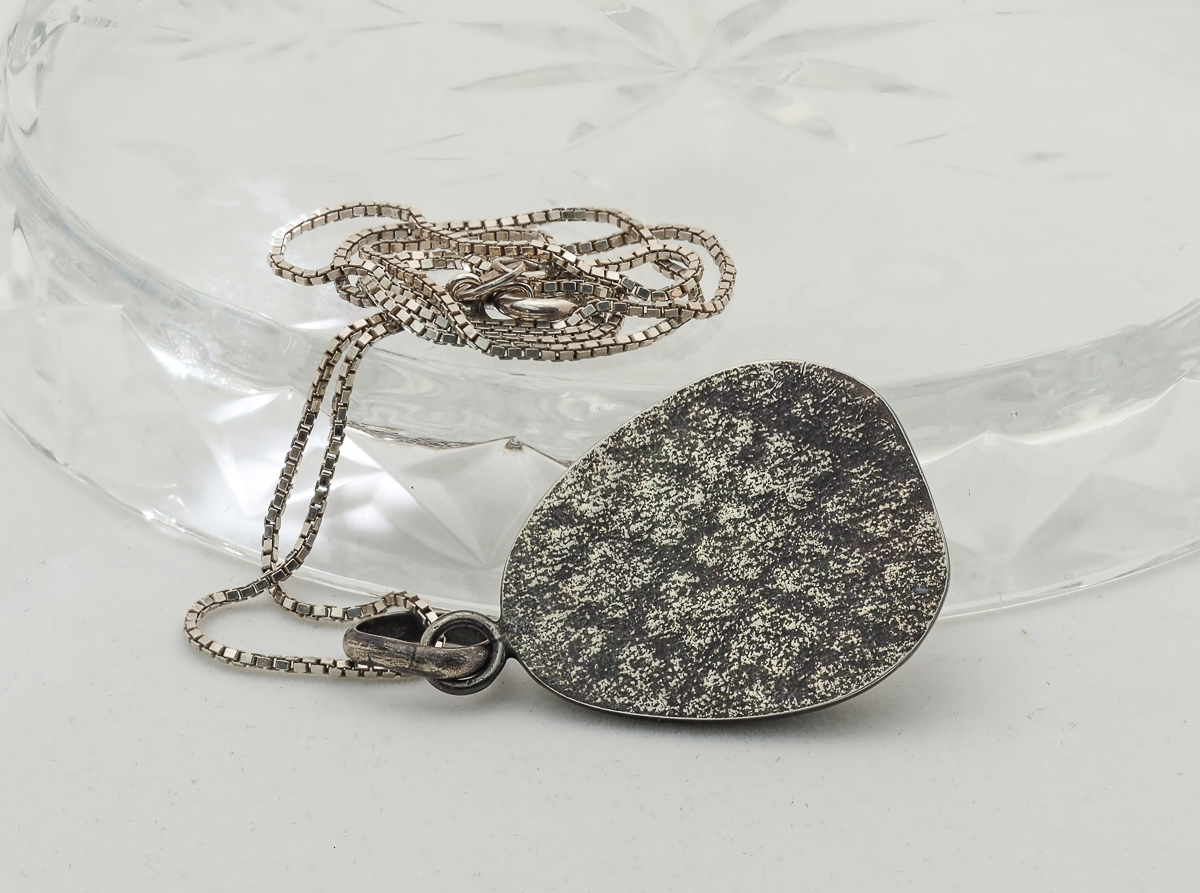
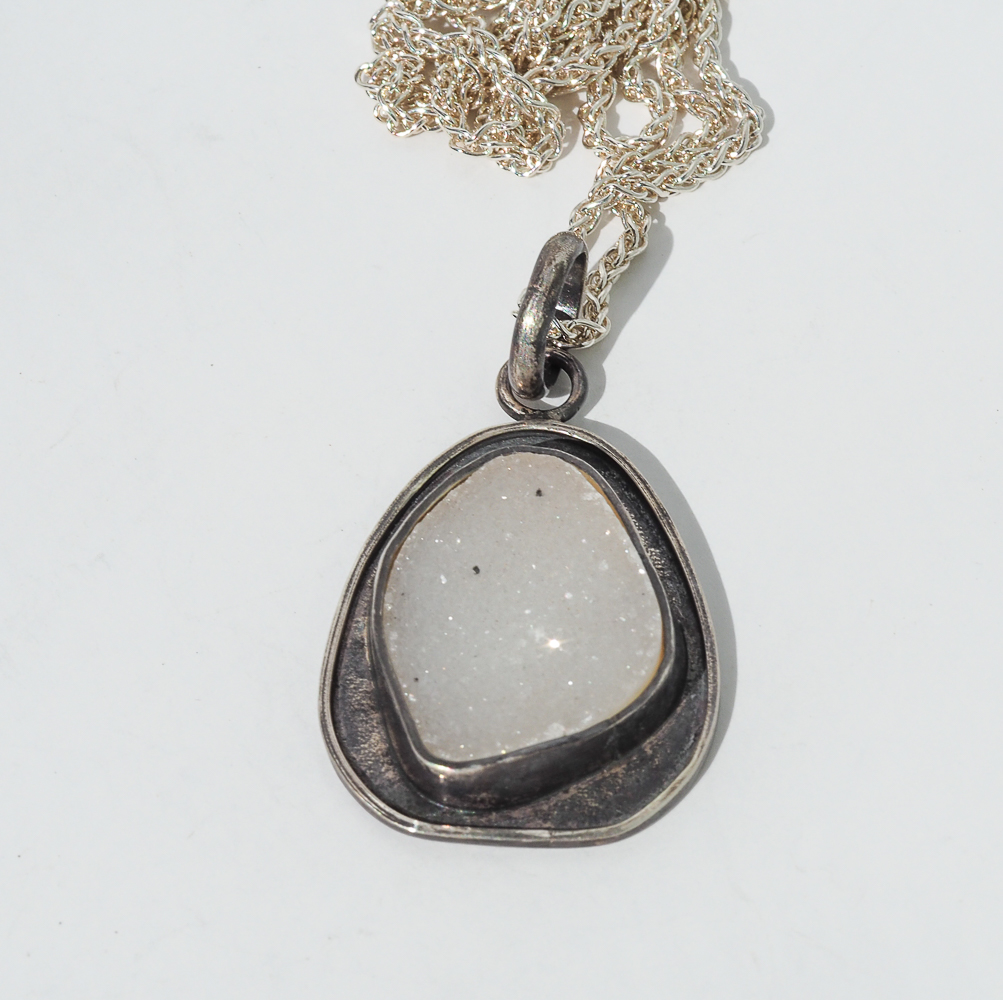
Sugar Moonbeams Druzy Pendant
Tip: Understand the Changing Nature of Surface Treatments on Silver
Silver has a molecular surface that easily interacts with its surrounding environment without degrading. This property is what makes silver part of the elite group of metals known as “noble metals.” I think of silver as having a living surface, like a skin. This skin is constantly interacting with the environment around it. When it interacts with the sulfurs in air, it “oxidizes” and develops a coating that is becomes darker. This coating can be worn away or diminished by contact with other surfaces. For example, a ring with engraved grooves will naturally develop a darker surface over time through oxidation. This darkening will be visible mainly in the grooves though, but not on the higher surfaces of the ring. Why is this? The surface of the ring is exposed to abrasion simply by daily wear and is gradually rubbed off. The grooves of the ring are protected from that abrasion and so they retain the oxidation. It all adds up to a pleasantly “seasoned” look for the piece.
As a jewelry maker I can hasten the process of “seasoning” silver jewelry while making it by using compounds of sulphur. In this first step, the surface of the piece darkens and becomes “oxidized.” I then selectively polish or buff the piece, taking away the coating in some areas to bring out highlights while allowing the oxidation to remain in the low parts of the pattern. In this way, I create a pleasing visual definition through light and shadow. I use the highs and lows of the surface, working in concert with the patina, to bring a satisfying dimension to the piece.
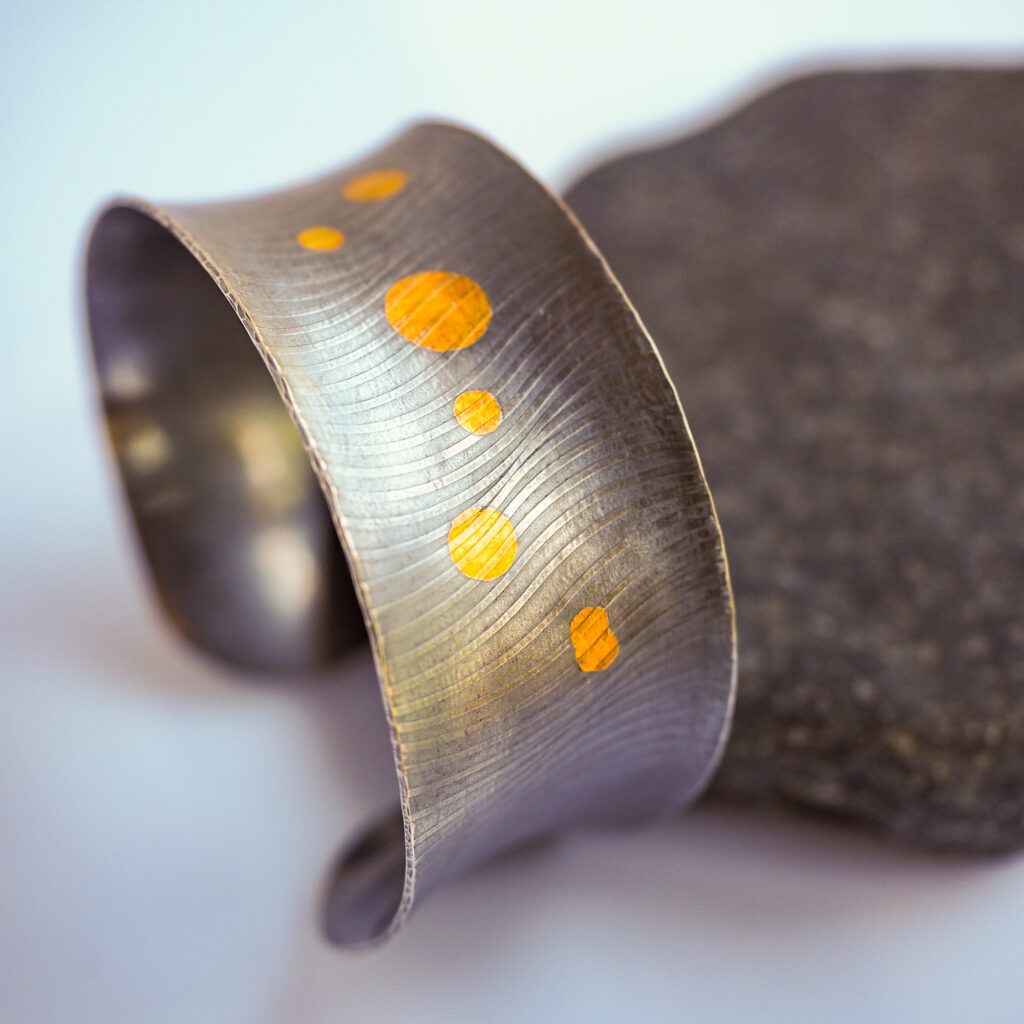
Beach Balls Cuff Bracelet
It is important to remember that any surface treatment or patina on silver is fundamentally an impermanent one and is always changing, whether that patina is created intentionally or by natural process of the piece living in oxygen. Like everything and everyone, silver’s surface will be changing with time and experience. Yet silver’s atomic structure as a “noble metal” means it is not destroyed by these surface changes. Its surface can be refreshed and restored. Silver is a precious noble metal that can endure for centuries. We can be mindful and appreciative of this duality of temporal and eternal characteristics of silver as we work with it and enjoy it in jewelry.
Tip: Another Creative Opportunity with Patinas
So far we have been exploring how silver responds to patinas and how we can design pieces to take advantage of the presence of a patina. The absence of a patina can become a creative tool for jewelry as well. Let’s consider how patinas can be deployed with another noble metal, namely, gold. While the skin of silver readily interacts with oxidizers and turns dark, the molecular “skin” of gold is highly resistant to tarnish. Gold does not accept a patina. Gold resists tarnishing in air and water. This is why ancient gold artifacts including jewelry from civilizations that existed thousands of years ago can be seen in museums around the world.
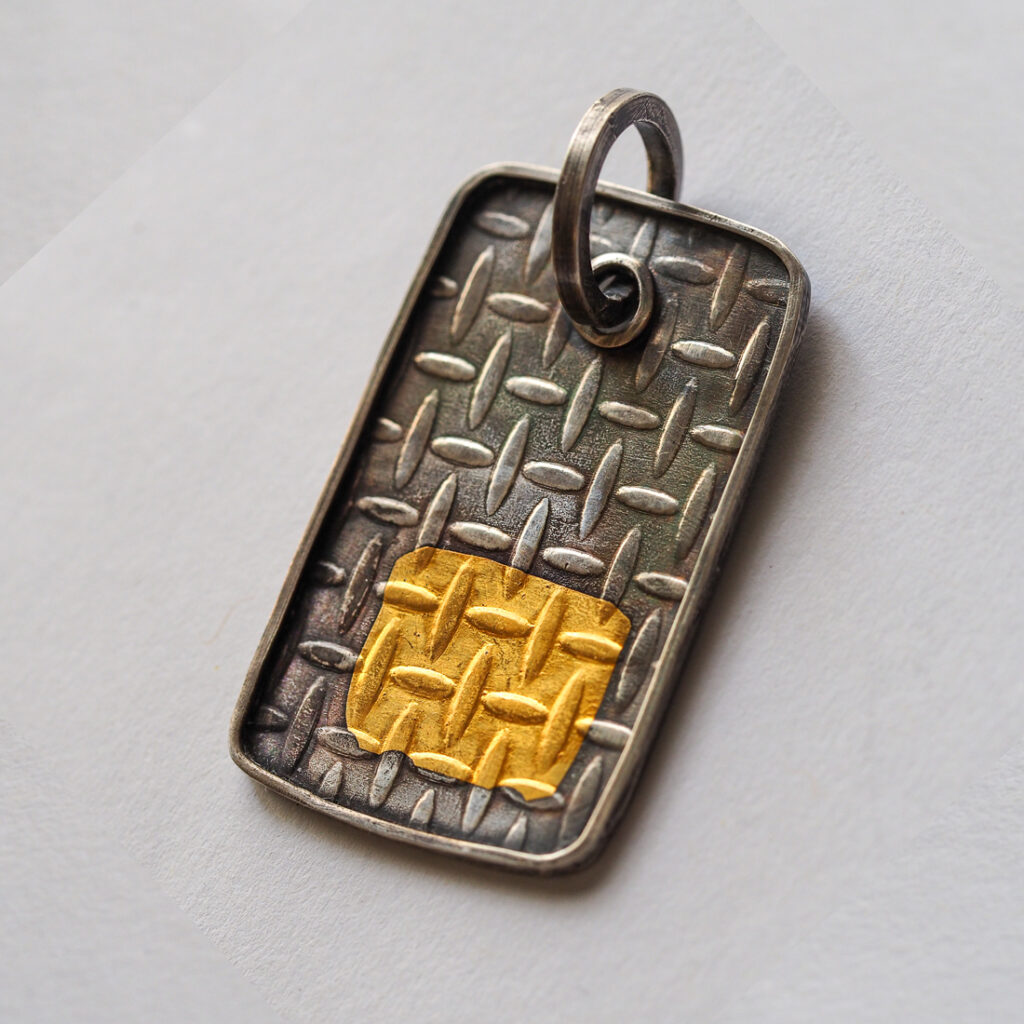
Gold Medal Talisman Pendant
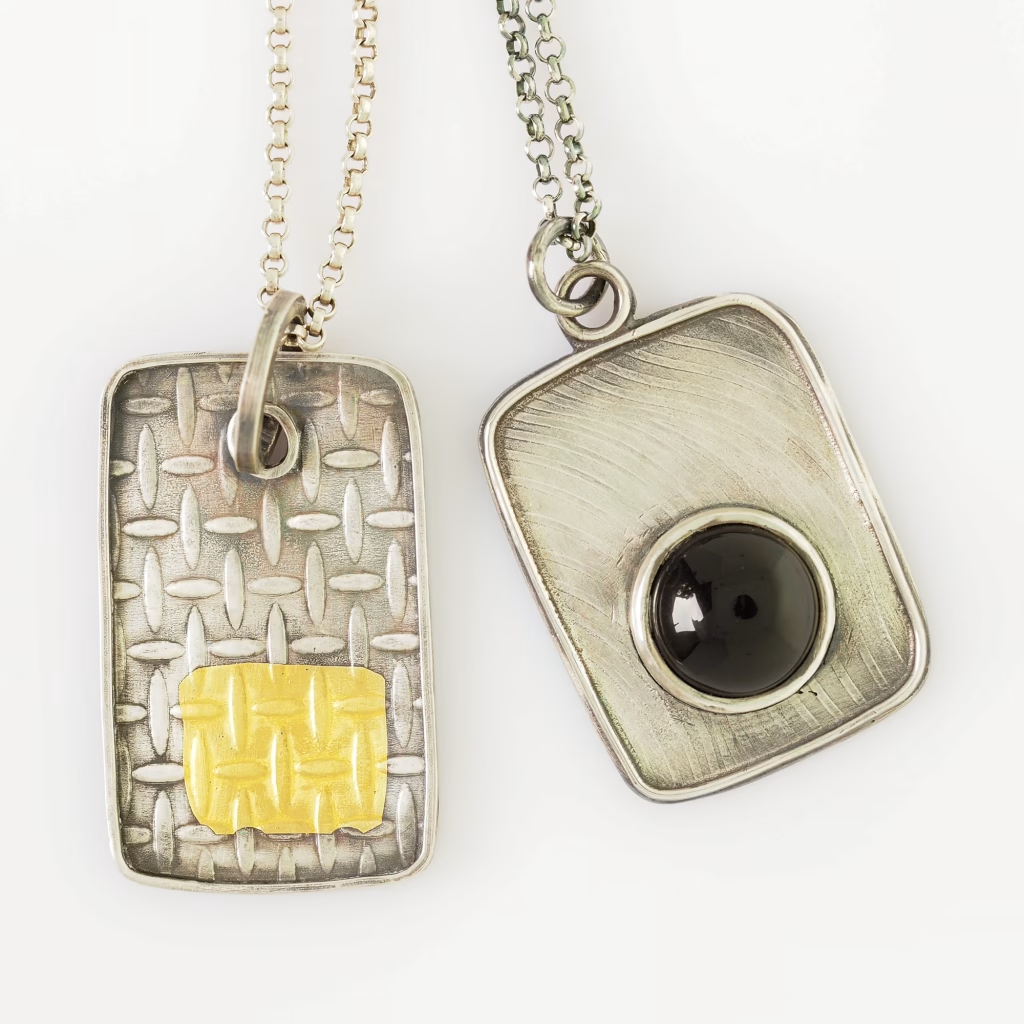
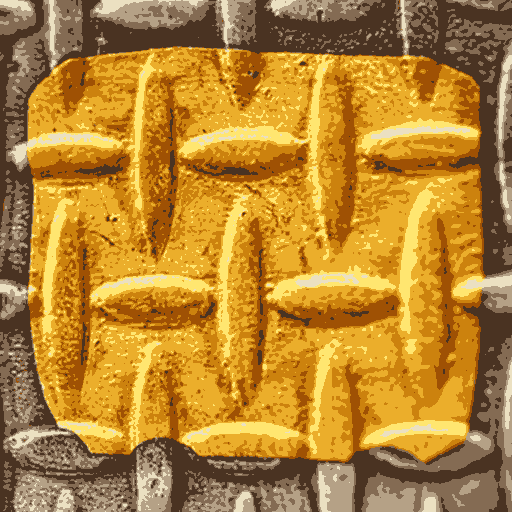
For a striking effect, gold and silver can be used together in a single jewelry piece and then a darkening patina applied to both. The silver will react by darkening while the gold will resist the patina. The result is that gold elements appear even brighter and more intensely colored against the dark silver background. In other words, the piece brings us the presence and the absence of patina, to create a combined state that is better than either state standing alone. Examples can be seen in the Gold Medal Dog Tag Pendant and also in the Beach Balls Cuff Bracelet.
Tip: How To Maintain Your Jewelry With Patina
So what if we have a dark patina that we love, can we keep patinas dark? The answer is both yes and no. We can protect the patina and extend its life. If it should eventually become faded and lighter than we prefer, we can refresh the patina.
Firstly, to protect your jewelry’s oxidized patina, never use a silver polish or silver cleaner on it. Those products are designed to remove unwanted patina such as on sterling silver flatware.
Instead of polish simply use a soft cloth and mild soap if necessary to clean your oxidized jewelry. No need for a toothbrush or any abrasive material, including silver polish cloths. An old, clean dishtowel used for glassware would be perfect for drying your piece.
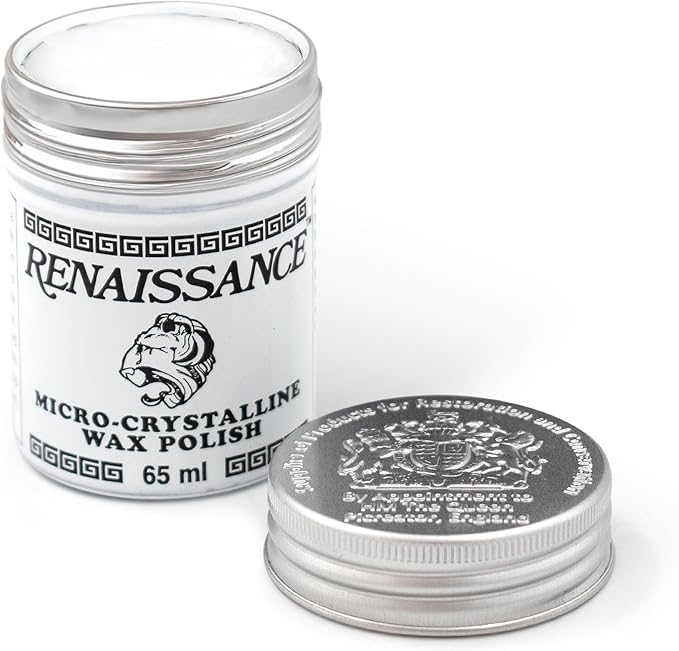
To give extra protection to the patina, I apply a finishing coat of the microcrystalline wax Renaissance Wax and buff gently. This wax was developed by the British Museum to clean, polish and protect surfaces without damaging them. It is available online and can be applied to your piece at home from time to time if desired. This wax is the only protective sealer that I recommend. It does not flake or chip and it does not prevent future renewal of the patina as a lacquer or sealant would do.
Tip: Your Jewelry Patina Can Be Restored
Even if your patina eventually rubs off or fades, your piece from my studio at Donna Weaver Design is not ruined. Its long noble life is not shortened. Underneath its surface patina is solid precious metal. It is not coated, plated or filled. Solid silver in its natural state is simply whiter and shinier. Your patinas can be refreshed and renewed if desired. Contact us for more information if you would like to explore having your patina refreshed or renewed (Donna Weaver Design jewelry only).
With these tips, you can feel confident about jewelry with patinas, knowing you are destined to have a long and noble life together.