We live in a culture that too often treats things as disposable. When something breaks, the usual advice is simple: throw it away, buy another. But this approach results in massive amounts of waste. What if our belongings could, by design, be part of a different story — one of endurance, repair, and meaning?
Take, for example, the humble keychain. Most are mass-produced, stamped out by machines, meant to advertise something or be used casually until they wear down and are tossed aside.
But a keychain can also be more. Much more.
Broken, But Not Lost
Well loved, but worn; top ring is snapped on one side
With a machine-made keychain, likely made of base material like brass that has been coated or plated, the answer would have been No. Once a piece like that fails, it’s destined for the landfill. In other words, it’s part of the problem for our planet.
But handmade solid silver jewelry is different. Silver is what is known as a noble metal, along with gold and platinum. It resists decay. Silver jewelry can be repaired. Scratches can be smoothed and patinas restored. Silver jewelry can last a lifetime and beyond.
In the Jewelry Workshop
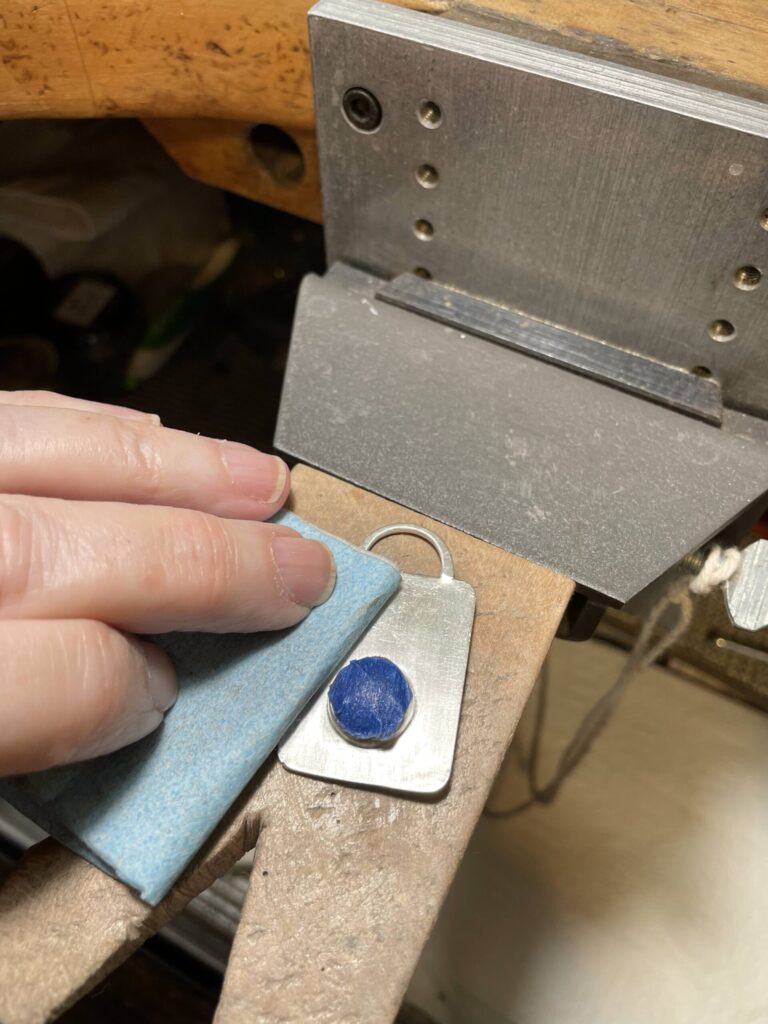
On the bench: restoring strength to the piece
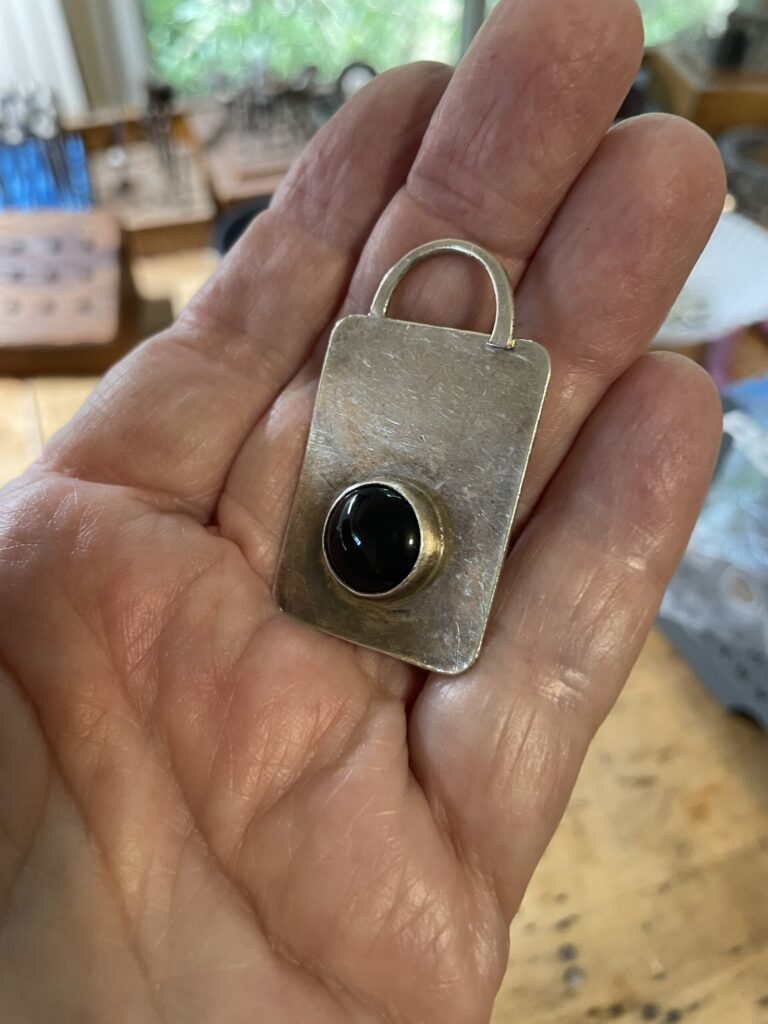
Soon the piece was back in my hands. Examining it, I was struck by how beautifully it had aged. It bore the signs of a life well-lived, polished by years of use. Restoring the piece felt like visiting with an old friend.
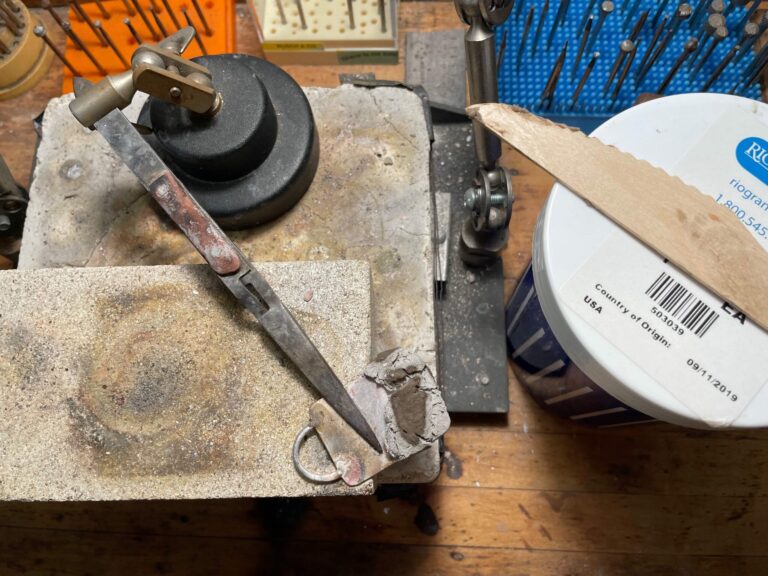
The interesting challenge for this repair was that one must heat the piece up and keep it cool–all at the same time. The snapped hoop must be heated to melt the solder that will rejoin the hoop to the body of the piece. At the same time, the onyx gemstone must be protected from heat or it may crack.
I approached this duality with several strategies. I generously packed heat resistant gel around the area with the stone to protect it. I also suspended the stone area off the side of the block which concentrates heat. After careful positioning, I went in with my torch, using a traditional method known as “hot and fast.”
A Happy Outcome
Restored and Ready to Return to Service
Once repaired, the keychain was better than ever — strong, whole, and ready for action again. My nephew’s words warmed my heart:
“Your jewelry is really beautiful. I am honored to be able to carry a piece.”